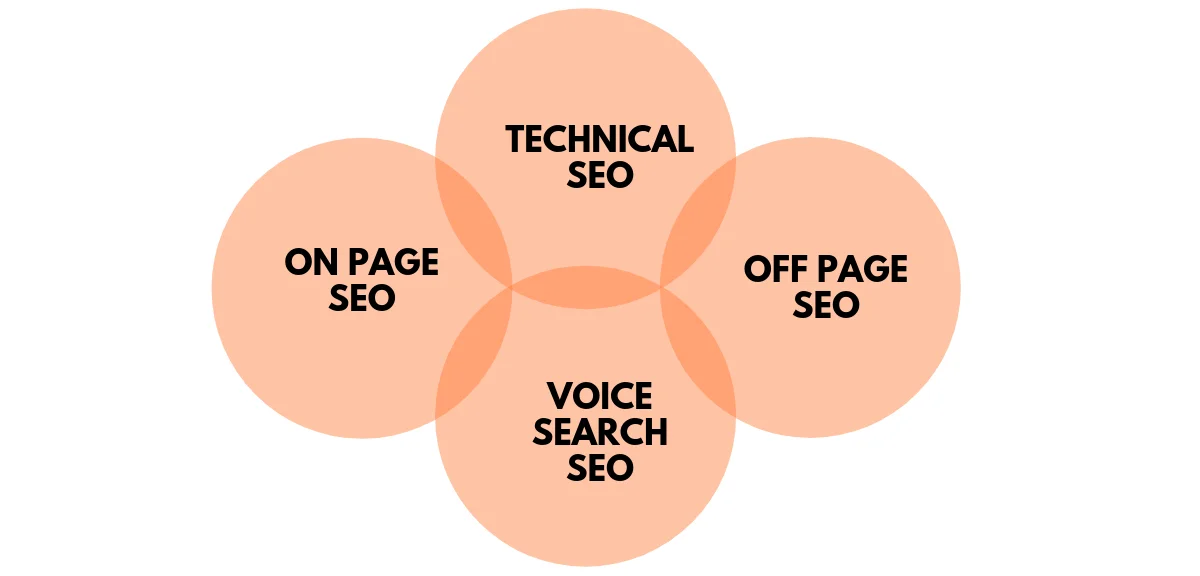
An advanced keyword density analyzer does far more than count how many times you mentioned a word. It maps your entire keyword strategy — showing you distribution patterns, semantic variations, competitor comparisons, and optimization scores that tell you exactly where your content stands before you hit publish. If you’re still guessing whether you’ve used your target keyword enough times, you’re flying blind. This tool gives you data, not guesses.
[rank_math_toc]
What Makes This Keyword Density Analyzer “Advanced”?
Basic keyword density checkers do one thing: they count how many times a word appears and divide by total word count. Useful? Sure. Sufficient? Not even close. Our advanced analyzer goes several layers deeper to give you actionable intelligence about your content’s SEO readiness.
Here’s what sets it apart:
Multi-keyword tracking: Analyze your primary keyword, secondary keywords, and LSI (Latent Semantic Indexing) terms all at once. Most free tools only check one keyword at a time. If you’re optimizing for three related terms, you need to see all three in context.
Distribution mapping: The tool doesn’t just tell you that your keyword appears 12 times — it shows you WHERE those 12 appearances fall. Are they clustered in the first 200 words? Spread evenly? Missing from the conclusion? Distribution matters for SEO because search engines expect natural, topic-relevant keyword placement throughout an article.
Semantic variation detection: Search engines don’t just match exact keywords anymore. They understand that “budget laptop” and “affordable notebook” are talking about the same thing. Our analyzer identifies related terms and variations in your content and factors them into your optimization score.
Readability integration: Keyword density and readability aren’t separate concerns. Stuffing keywords destroys readability, and poor readability hurts rankings through high bounce rates and low dwell time. Our tool flags when your keyword optimization is coming at the expense of readability.
Image placeholder: Screenshot of advanced keyword density analyzer dashboard — alt text: “Advanced keyword density analyzer showing multi-keyword tracking and distribution heatmap”
Why Keyword Density Still Matters in Modern SEO
Every few months, someone publishes an article claiming “keyword density is dead.” It’s not. What’s dead is the old-school approach of jamming your exact keyword into every paragraph and expecting to rank. But keyword presence and distribution absolutely still matter, and here’s why:
Search engines need signals. Google’s algorithms are sophisticated, but they’re not mind readers. If your page is about “home gym equipment,” you need to actually use that phrase (and related terms) in your content. Without keyword signals, Google has to rely on backlinks and metadata alone — and that puts you at a disadvantage against competitors who optimize both content and links.
Topic modeling relies on word patterns. Modern search engines use techniques like TF-IDF (Term Frequency-Inverse Document Frequency) and BERT-based semantic understanding to determine what a page is about. These systems look at word frequency patterns across your content. A keyword density analyzer helps you ensure those patterns are present.
Content quality correlates with keyword coverage. According to Moz’s search ranking factors research, comprehensive content that covers a topic thoroughly — which naturally includes keyword variations and related terms — consistently outperforms shallow content. Our analyzer helps you identify gaps in your topic coverage.
How to Use the Advanced Keyword Density Analyzer
The tool is designed to be powerful without being complicated. Here’s the workflow:
Step 1: Paste your content. Drop in the full text of your article, blog post, product page, or any content you want to analyze.
Step 2: Enter your target keywords. Add your primary keyword first, then any secondary keywords or related terms you want to track. You can add up to 10 keywords for a single analysis.
Step 3: Run the analysis. The tool processes your content instantly and generates a comprehensive report.
Step 4: Review the results. You’ll see density percentages for each keyword, a distribution map showing where keywords appear, a semantic coverage score, readability metrics, and specific optimization recommendations.
Step 5: Optimize and re-check. Make adjustments based on the recommendations, then re-run the analysis to see if your changes improved your scores. The tool is unlimited — run it as many times as you need.
If you’re managing content at scale for programmatic SEO websites, this iterative optimization process is essential for maintaining quality across hundreds or thousands of pages.
Understanding Your Analysis Results
The report includes several sections. Here’s how to interpret each one:
Keyword Density Score
This is your primary metric. It shows the exact density percentage for each keyword you’re tracking, along with a color-coded rating: green (well-optimized), yellow (slightly under or over), or red (significantly under-optimized or potentially stuffed). Green doesn’t always mean perfect — it means you’re within the generally accepted range for that type of keyword.
Distribution Heatmap
This visual representation shows how your keywords are spread across your content. Each paragraph gets a color intensity based on keyword presence. A well-optimized article shows a fairly even distribution with slightly higher density in the introduction and key sections. A poorly optimized article shows dark spots (clusters) and blank areas (keyword deserts).
Semantic Coverage
This score measures how well your content covers the broader topic, not just the exact keyword. It checks for related terms, synonyms, and contextual vocabulary that search engines expect to see on a page about your topic. A high semantic coverage score means your content is thorough and topically relevant.
Readability Impact
This section flags instances where keyword insertion appears to be hurting readability. If a sentence contains three instances of your target keyword within 15 words, that’s a readability problem regardless of whether your overall density is “in range.” The tool identifies these hotspots so you can rewrite them naturally.
Image placeholder: Example of keyword distribution heatmap visualization — alt text: “Keyword distribution heatmap showing even versus clustered keyword placement in content”
Keyword Density Benchmarks by Content Type
Different types of content have different density expectations. Here’s what we’ve found works best based on analysis of thousands of ranking pages:
Long-form blog posts (2,000+ words): Primary keyword at 0.5-1.5%, with 3-5 semantic variations scattered throughout. Long-form content naturally dilutes keyword density, which is fine — the total number of mentions matters more than the percentage.
Product pages: Primary keyword at 1-2%. Product pages are shorter, so each keyword mention carries more weight. Include the product name, category, and key features naturally in descriptions and specifications.
Landing pages: Primary keyword at 1.5-2.5%. Landing pages are typically 500-800 words, so the density can be slightly higher without triggering spam signals. Focus on conversion-oriented language alongside your keywords.
Category pages: Primary keyword at 1-2% with heavy emphasis on related terms. Category pages should demonstrate topical authority by covering the full scope of the category.
These benchmarks come from analyzing pages that rank in the top 10 results across various niches. They’re guidelines, not rules — always prioritize natural writing over hitting a specific number. And if you’re building high-CPM niche websites with AI tools, consistent benchmarking across your entire site compounds into significant traffic gains over time.
Common Keyword Density Problems and Fixes
After running thousands of analyses, we see the same issues repeatedly. Here are the most common problems and how to fix them:
Problem: Keyword clustering in the introduction. Writers often front-load their keyword, using it 4-5 times in the first 200 words and then barely mentioning it again. Fix: Redistribute keyword mentions evenly. Move some instances into body paragraphs, the conclusion, and subheadings.
Problem: Missing semantic variations. Your primary keyword density might be perfect, but you’re not using any related terms. Fix: Add synonyms and related phrases naturally. If your keyword is “meal prep,” also use “meal planning,” “batch cooking,” and “weekly food preparation.”
Problem: Over-optimized headers. Every H2 contains the exact keyword. Fix: Vary your header language. Use the keyword in one or two headers and use related phrases in the others. Search engines don’t need the exact keyword in every heading to understand your topic.
Problem: Thin content inflating density. A 300-word article with 6 keyword mentions shows 2% density, but it’s still thin content. Fix: Add more substantive content. A lower density in a comprehensive article always beats a higher density in a shallow one.
Advanced Keyword Density vs. Basic Checking
You might be wondering: why not just use a simple keyword counter? Here’s the honest answer — you can, and for quick checks, it’s fine. But if you’re serious about SEO, basic checking leaves too much on the table.
A basic checker tells you that your keyword appears 8 times. An advanced analyzer tells you that your keyword appears 8 times, but 5 of those are in the first third of the article, you’re missing 4 semantic variations that your top-ranking competitors are using, and your readability score dropped 12 points because of forced keyword placement in the second paragraph. That’s the difference between data and intelligence.
Our basic keyword density checker is great for quick validations. This advanced analyzer is for when you need the full picture. Use both — they’re both free, and they serve different purposes.
For a complete content optimization toolkit, pair this analyzer with our free text tools for writers and AI prompt generator to build content that’s optimized from first draft to final publish.
Image placeholder: Comparison table showing basic vs. advanced keyword analysis features — alt text: “Feature comparison between basic keyword density checker and advanced analyzer tool”
Frequently Asked Questions
What’s the ideal keyword density for SEO?
There’s no single ideal percentage. For most content, 0.5-2% works well for primary keywords. The right density depends on content length, competition level, and keyword type. Short-tail competitive keywords tend to perform better at lower densities, while long-tail keywords can handle slightly higher densities. Our analyzer provides recommendations based on your specific content and keywords.
Does Google still use keyword density as a ranking factor?
Google has stated they don’t use keyword density as a direct ranking factor. However, keyword presence and distribution indirectly affect rankings because they signal topical relevance. If your keyword doesn’t appear in your content at all, it’s hard for Google to understand what your page is about. The key is natural usage, not a specific percentage.
How is this different from the basic keyword density checker?
The basic checker counts keyword frequency and calculates density percentage. The advanced analyzer adds multi-keyword tracking, distribution mapping, semantic variation detection, readability impact analysis, and optimization recommendations. It gives you a complete picture instead of just a number.
Should I optimize for multiple keywords on one page?
Yes, when those keywords are closely related. A page about “running shoes” should naturally also target “running sneakers,” “jogging shoes,” and “athletic footwear.” Our analyzer lets you track all related terms simultaneously and see how they work together to create topical relevance.
What are LSI keywords and why do they matter?
LSI (Latent Semantic Indexing) keywords are terms related to your primary keyword that help search engines understand your content’s topic more completely. For example, if your primary keyword is “coffee maker,” LSI keywords might include “brewing,” “espresso,” “filter,” “carafe,” and “beans.” Using these terms naturally in your content strengthens your topical authority. Our analyzer detects LSI keyword coverage in your content.
How often should I analyze my content’s keyword density?
At minimum, before publishing any new content. For existing content, analyze whenever you update or refresh an article — which should be every 6-12 months for most evergreen content. If you notice rankings dropping, keyword analysis should be one of your first diagnostic steps. According to Ahrefs’ analysis of keyword density, pages that maintain consistent keyword coverage over time tend to hold their rankings more reliably.
Disclaimer: This article is for informational purposes only. SEO best practices change as search engine algorithms evolve. The benchmarks and recommendations provided are based on analysis of current ranking data and widely accepted industry practices. Always refer to the latest guidelines from Google Search Central for the most current SEO recommendations.